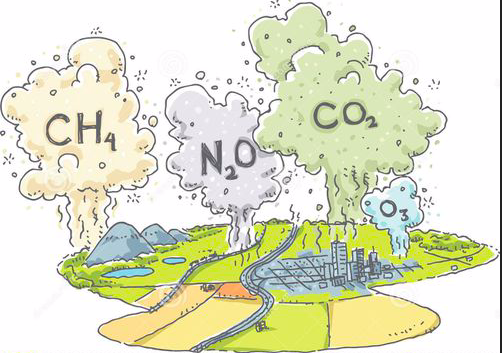
Global agricultural productivity has increased in adjacent to the increase in global population, however, in the last 50 years as more of the population becomes more affluent the increase in agriculture has increased exponentially as our appetite grows. Meat production is expected to double from the 2000’s figure of 229 million tonnes to 465 million tonnes in 2050. In the UK food was responsible for one-fifth of all greenhouse gas emissions. It was found that whilst animal agriculture only produces 9% of the global human-caused CO², “it generates 65% of human-related nitrous oxide, which has 296 times more the Global Warming Potential (GWP)”. Climate scientists estimate that a global transition towards low-meat diets could half the costs of climate change mitigation by 2050. Many studies point out that improvements in technological efficiency will be insufficient to avert absolute increases in GHG emissions or deforestation, a tactical change of our diets and consumption habits is needed to make a considerable impact..
Ok. Meat = GHG. What is the alternative?
A study analysed a dataset including 2,041 vegans, 15,751 vegetarians, 8,123 pescatarians and 29,589 meat eaters (with the meat eaters split into high, medium and low meat consumption). Taking into account portions of specific food items (e.g. a slice of cheese rather than the whole block) and using basis calorific intake of 2000 calories per day. The results showed, you guessed it, meat came on top on the GHG scale. A correlation was found between higher GHG emissions and the number of animal-based items within a diet.
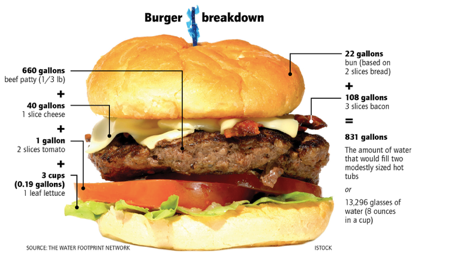
In the face of these facts, many feel unsettled about the impact of their McDonald’s cheese burger, see figure. The outpour from the latest IPCC report has seen a drastic increase in interest of the fate of our planet, the public search for the best, easiest, most affordable, and let’s not forget, the trendiest way to “save the world”.
The hot topic: Sustainable diets, particularly reducing meat consumption. The Food and Agriculture Organisation (FAO) defines a sustainable diet as one with “low environmental impacts which contribute to food and nutrition security and to a healthy life for present and future generation… (and) are protective and respectful of biodiversity and ecosystems”.
Part of that definition included “nutrition security” and a focus on “future generations”, the production of meat involves an unsustainable use of our resources including land, water and grains. David Pimentel, professor of ecology in Cornell University stated that “if all the grain currently fed to livestock in the United States were consumed directly by people, the number of people who could be fed would be nearly 800 million. On average 50% of the corn and 80% of the soybeans produced worldwide are fed to farm animals if all food crops were fed to humans, it is thought there would be around a 70% increase in food availability. These statistics can’t be ignored with a population that is expected to hit 9.7 billion by 2050.
Now, I don’t expect you to ditch the meat right this instant and scream from the rooftops “I’m a veeegaaan, pass the tofu”. Meat consumption is something that is ingrained into us from a young age, something included in Eat Well plates in primary school and is something you have every Sunday roast, but a reset of the mindset can do the trick. I hope with this information you can evaluate your consumption and adjust where you see necessary.

 Politics of Climate Change