Energy, water and food resources, otherwise known as the nexus are inextricably linked within the earth systems which makes all aspects of it vulnerable to climate change. As a society we use our Earth’s resources unsustainably, and whilst other aspects of the nexus can be replaced or adapted e.g. new farming methods and a move to renewable energy sources, water cannot be replaced.
Islands in particular tend to be predisposed to the negative impacts of climate change, thus the Caribbean islands are classed as vulnerable. Many countries in the Caribbean have already adapted their national environmental policy to the integrated water resources management protocol and have cohesively incorporated environmental talks into the Council for Trade and Economic Development within the Caribbean Community. The issue of water security is a massive threat to the island communities, the IPCC 4thassessment predicts that the mean annual precipitation is likely to decrease up to 20% in the subtropics. In addition to the threat of water scarcity is the warning of sea level rise that is yet to come. The IPCC report (2007) addresses the increase in the global mean sea level at a rate of 1 to 7mm/year due to the combination of land and ice melt as well as thermal expansion, this puts low-lying Caribbean islands at a high risk of land loss.
The Food and Agricultural Organisation categorises countries as ‘water scarce’ when they have “less than 1000 m³ per capita per year”. On a recent trip to the furthest east island of the Caribbean, Barbados, the issue of water scarcity was apparent, with a rate of “296m³ per capita” in the 2005 Food and Agriculture Organisation, which makes it the 15thmost water-scarce nation in the world. The availability of water resources on the island such as spring water or surface water are minimal compared to the groundwater, due to the highly porous coral limestone of the island.
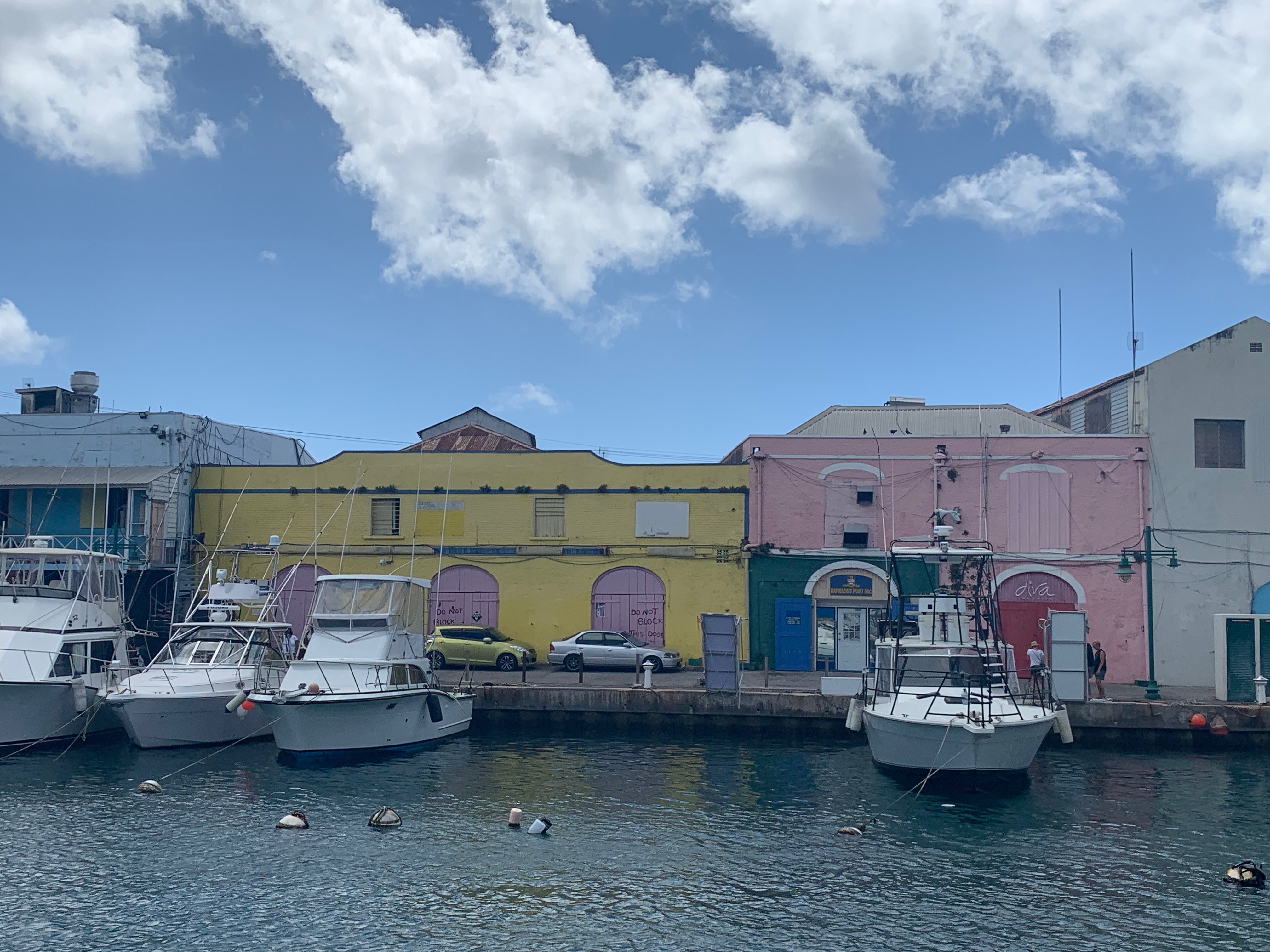
Bridgetown: the capital of Barbados, population 110,000
Parameters have been put in place on the island over the years since the establishment of the Barbados Water Authority (BWA) as a governmental entity in 1980. The BWA is tasked with the control of the water treatment units on the island, the provision of portable drinking water as well as monitoring and protecting the water sources on the island for future use. The water sources on the island include springs, well and desalination plants which have to be carefully managed to distribute to the public.
The Barbados Water Authority listed water conservation tips on their website, tips including collecting rainwater for garden use and washing cars, “fix leaking taps”, and generally only using the amount of water needed. When speaking to islanders they expressed their understanding of climate change and its increasing effects on the island. I asked a local to what extent he regarded and complied with the protocol and water conservation tips given by the BWA, and he said “the islanders understand that climate change is immanent, they have seen it with their own eyes over the years so most want to what they can to protect our island for as long as we can.”
Now, the Caribbean islands are doing their bit to protect themselves from the issues regarding climate change, but their actions are minimal in the grand scheme of things. Action needs to be taken by the larger actors in the global community, countries such as the US, China and many other high greenhouse gas emitters all need to make an effort of change. After all, climate change holds no national boundaries.

 Politics of Climate Change