We are living in turbulent times with little certainty of the future. The British political system is in peril and by the low standards of our government’s climate targets so is our environment. Our political system has failed us. But arising are the leaders of the future.
In the face of Brexit, the fate of our climate is up in the air and feeling that young people’s views aren’t being heard is rife. Over 70% of 18 to 24-year-olds voted to remain in 2016, with a correlation between age and voting preferences, older people were more likely to vote to remain. Each election 1.5 million 16 and 17-year-olds are denied the vote in the UK, meaning that the 1.5 million teens who weren’t legally allowed to vote for the 2016 Brexit referendum are now turning 20 and will be more affected by the vote than their older counterparts.
We have witnessed a steady increase in our youth showing interest in how our government is run. Greta Thunberg has become the climate activist icon that we didn’t think we needed. At the age of 15 she began her solo climate protest of striking from school in august 2018 and since then 20,000 students have joined this movement in countries such as Germany, Canada, Japan and the UK.
A study analysed a dataset including 2,041 vegans, 15,751 vegetarians, 8,123 pescatarians and 29,589 meat eaters (with the meat eaters split into high, medium and low meat consumption). Taking into account portions of specific food items (e.g. a slice of cheese rather than the whole block) and using basis calorific intake of 2000 calories per day. The results showed, you guessed it, meat came on top on the GHG scale. A correlation was found between higher GHG emissions and the number of animal-based items within a diet.
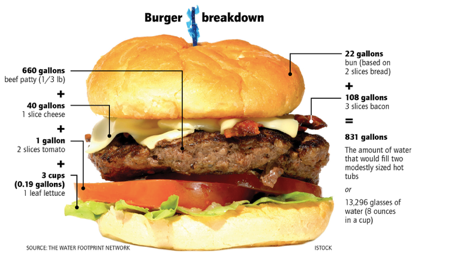
In the face of these facts, many feel unsettled about the impact of their McDonald’s cheese burger, see figure. The outpour from the latest IPCC report has seen a drastic increase in interest of the fate of our planet, the public search for the best, easiest, most affordable, and let’s not forget, the trendiest way to “save the world”.
What is the real cost, Ronald McDonald?
The hot topic: Sustainable diets, particularly reducing meat consumption. The Food and Agriculture Organisation (FAO) defines a sustainable diet as one with “low environmental impacts which contribute to food and nutrition security and to a healthy life for present and future generation… (and) are protective and respectful of biodiversity and ecosystems”.
Part of that definition included “nutrition security” and a focus on “future generations”, the production of meat involves an unsustainable use of our resources including land, water and grains. David Pimentel, professor of ecology in Cornell University stated that “if all the grain currently fed to livestock in the United States were consumed directly by people, the number of people who could be fed would be nearly 800 million. On average 50% of the corn and 80% of the soybeans produced worldwide are fed to farm animals if all food crops were fed to humans, it is thought there would be around a 70% increase in food availability. These statistics can’t be ignored with a population that is expected to hit 9.7 billion by 2050.
Now, I don’t expect you to ditch the meat right this instant and scream from the rooftops “I’m a veeegaaan, pass the tofu”. Meat consumption is something that is ingrained into us from a young age, something included in Eat Well plates in primary school and is something you have every Sunday roast, but a reset of the mindset can do the trick. I hope with this information you can evaluate your consumption and adjust where you see necessary.
Energy, water and food resources, otherwise known as the nexus are inextricably linked within the earth systems which makes all aspects of it vulnerable to climate change. As a society we use our Earth’s resources unsustainably, and whilst other aspects of the nexus can be replaced or adapted e.g. new farming methods and a move to renewable energy sources, water cannot be replaced.
Islands in particular tend to be predisposed to the negative impacts of climate change, thus the Caribbean islands are classed as vulnerable. Many countries in the Caribbean have already adapted their national environmental policy to the integrated water resources management protocol and have cohesively incorporated environmental talks into the Council for Trade and Economic Development within the Caribbean Community. The issue of water security is a massive threat to the island communities, the IPCC 4thassessment predicts that the mean annual precipitation is likely to decrease up to 20% in the subtropics. In addition to the threat of water scarcity is the warning of sea level rise that is yet to come. The IPCC report (2007) addresses the increase in the global mean sea level at a rate of 1 to 7mm/year due to the combination of land and ice melt as well as thermal expansion, this puts low-lying Caribbean islands at a high risk of land loss.
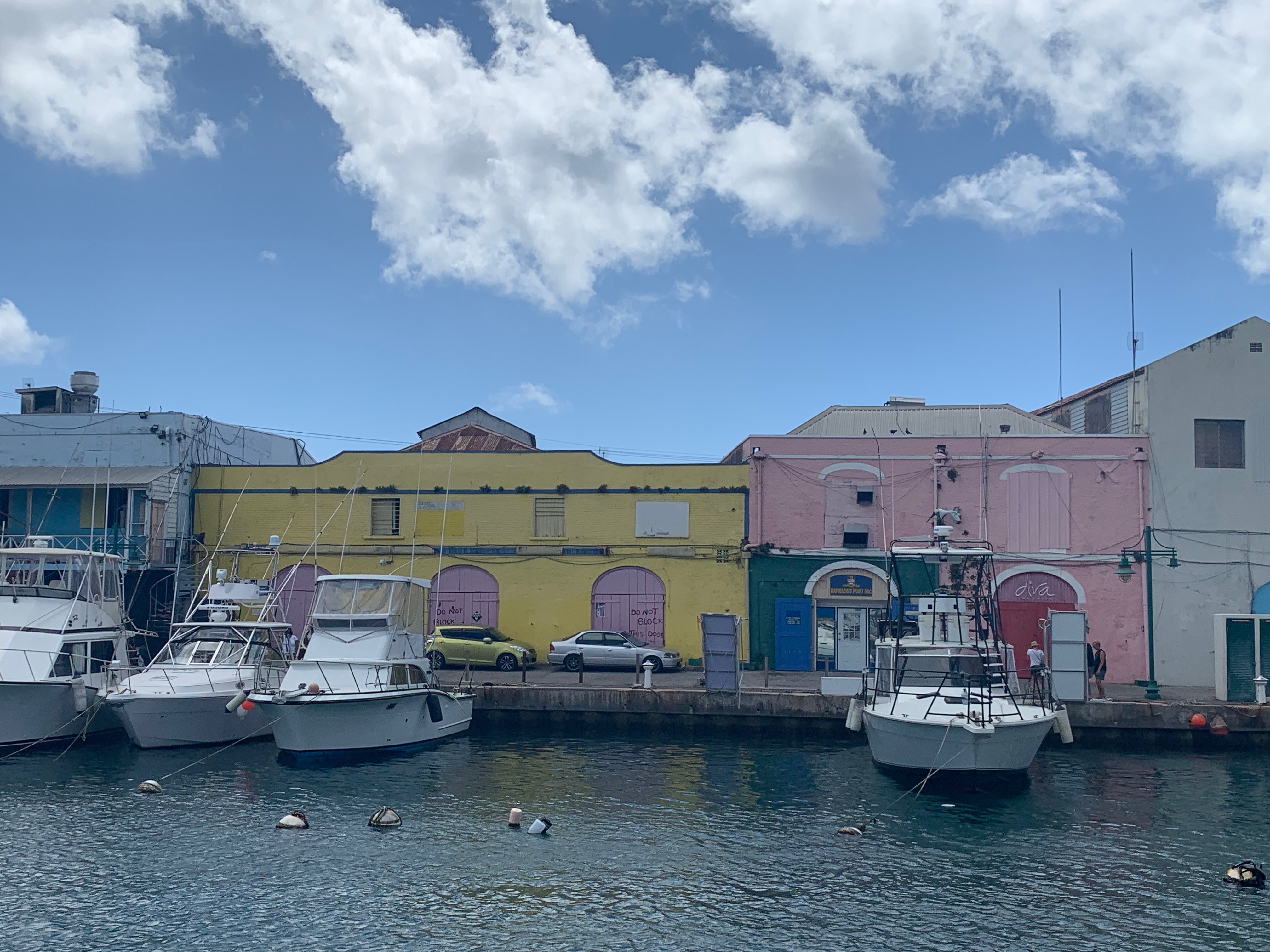
The Food and Agricultural Organisation categorises countries as ‘water scarce’ when they have “less than 1000 m³ per capita per year”. On a recent trip to the furthest east island of the Caribbean, Barbados, the issue of water scarcity was apparent, with a rate of “296m³ per capita” in the 2005 Food and Agriculture Organisation, which makes it the 15thmost water-scarce nation in the world. The availability of water resources on the island such as spring water or surface water are minimal compared to the groundwater, due to the highly porous coral limestone of the island.
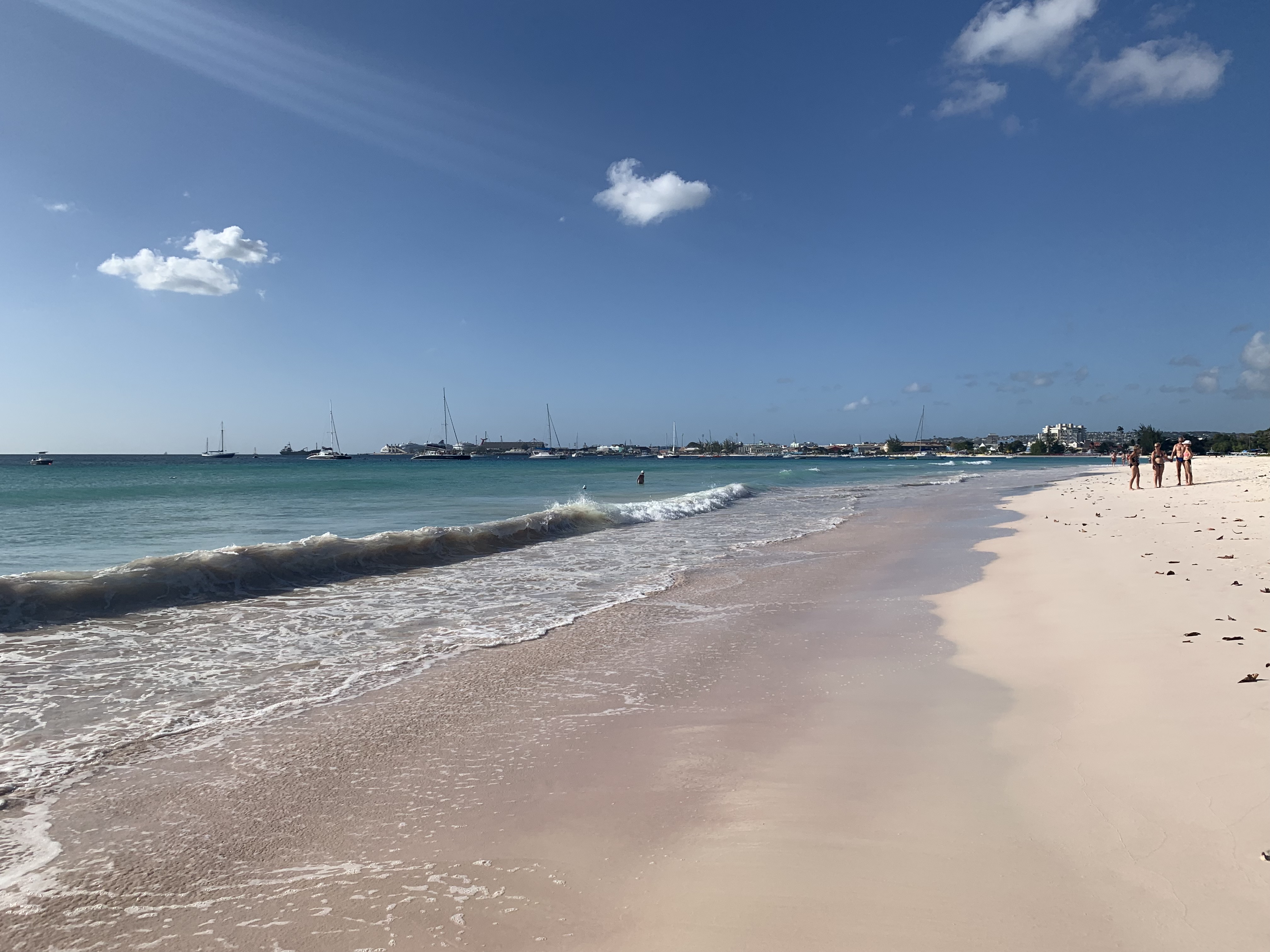
Bridgetown: the capital of Barbados, population 110,000
Parameters have been put in place on the island over the years since the establishment of the Barbados Water Authority (BWA) as a governmental entity in 1980. The BWA is tasked with the control of the water treatment units on the island, the provision of portable drinking water as well as monitoring and protecting the water sources on the island for future use. The water sources on the island include springs, well and desalination plants which have to be carefully managed to distribute to the public.
The Barbados Water Authority listed water conservation tips on their website, tips including collecting rainwater for garden use and washing cars, “fix leaking taps”, and generally only using the amount of water needed. When speaking to islanders they expressed their understanding of climate change and its increasing effects on the island. I asked a local to what extent he regarded and complied with the protocol and water conservation tips given by the BWA, and he said “the islanders understand that climate change is immanent, they have seen it with their own eyes over the years so most want to what they can to protect our island for as long as we can.”
Now, the Caribbean islands are doing their bit to protect themselves from the issues regarding climate change, but their actions are minimal in the grand scheme of things. Action needs to be taken by the larger actors in the global community, countries such as the US, China and many other high greenhouse gas emitters all need to make an effort of change. After all, climate change holds no national boundaries.
 Politics of Climate Change